About This Book
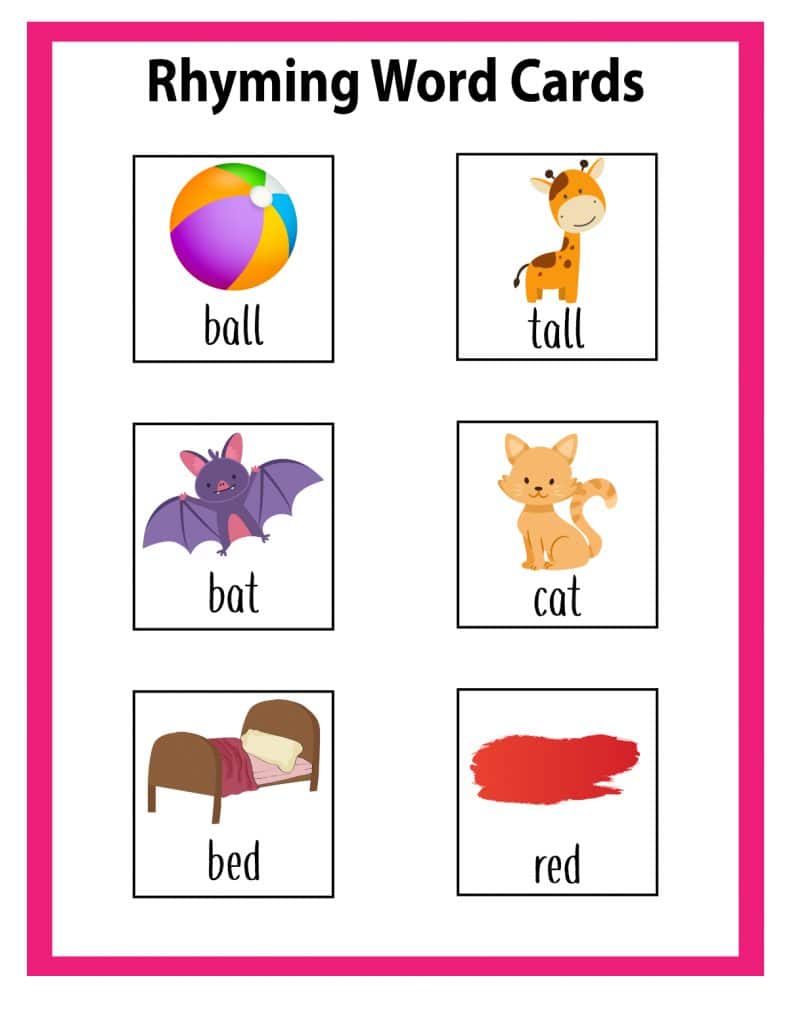
Rhyming Words Worksheets – Fun & Free Printables for Kids is a free printable worksheet set on rhyming words for children. The destination page is headed ‘Rhyming Words’ — this set’s subject in the host’s short form — and the file it serves, ’12. Rhyming Words.pdf’, carries the same name under the host’s numbered preschool-collection filename form (12.) — the same worksheets under the filename the site serves them by. The set’s work is listening made visible: word pairs that share their endings, matched, sorted, and spotted, so that the ear’s oldest game becomes the reader’s first tool.
Phonological awareness — hearing the sound-structure inside words — is the foundation skill under all of phonics, and rhyme is its ground floor. A child cannot profitably be taught that letters map to sounds until the sounds themselves are perceptible as separate, movable pieces, and rhyme is where that perception starts, because rhyming pairs isolate exactly one piece — the ending — and hold it up for inspection by making it chime. The worksheets’ exercises are the ear’s curriculum disguised as games: which word sounds like this one, which of these three does not belong, finish the pair. Each answer is a small act of analysis performed by listening alone, no letters required, which makes rhyme work the most inclusive practice in the early classroom — the child who knows no alphabet yet can be the class’s best rhymer, and often is. Teachers sequence this deliberately before and beside letter work, knowing the payoff compounds: rhyme-sensitivity today becomes onset-and-rime decoding tomorrow, and the word-family spelling patterns the year after. Parents contribute more than they know — every nursery rhyme ever chanted was this curriculum in fancy dress.
What Learners Will Practise
Hearing Endings
Learners practise noticing that words can share their tails while differing at the head. The shared tail, heard clearly, is phonology’s first visible object.
Odd-One-Out Listening
The set practises spotting the word that does not rhyme among its neighbours. Exclusion is analysis: the non-rhyme teaches what the rhyme is.
Completing Pairs
Children practise supplying a rhyming partner for a given word. Production outruns recognition — a made rhyme is a heard rhyme owned.
Key Features
The ear-first design is the feature: reading’s foundation practised with no letters required. The game disguise is the second — analysis performed as play — and the shelf fit the third, this rhyming set beside this list’s sight-words and letter-matching sets. On this shelf it echoes the words here.
Who This Book Is For
Young children whose ears lead their letters are its first audience. Teachers form its second readership, sequencing awareness before print. Parents make its third, chanting the curriculum unknowingly.
How to Use This Book
Say everything aloud; a rhyme worksheet done silently is a spelling test in disguise and a worse one. Honour nonsense rhymes offered in play — the ear experimenting is the ear learning. When a child cannot hear a pair, slow down and stretch the ending; the chime is in the tail.
Related Books
The sight-words set stands at Sight Words – Fun & Engaging Worksheets for Early Readers, and the letter-matching set at Match Letters – Fun Alphabet Matching Worksheets for Kids.